

Does a DIY rapid oil test from the internet really work?
Year of publication: 2026
Various manufacturers offer quick tests for lubricating oils on the internet. They claim that a single drop is sufficient for an oil diagnosis. The test result shows whether the oil is still fit for further use or needs to be changed. They also claim that any damage can be detected at an early stage. But is there anything to these promises?

The spot test - fast information at first glance
Most of these do-it-yourself checks are based on the principle of a classic “spot test”. This has been used for more than 50 years as a quick but rough method for assessing oils.
A small amount of the oil in use is applied to a special paper, on which the “spot” forms after a certain contact time.
Then you look at the appearance of the spot, starting from the centre and moving outwards to the edge. The spot test is also used in many lubricant laboratories - but almost only for engine oils and as part of the visual inspection. An experienced lab technician can easily make judgements about the quality of the oil from the appearance of the spot. For example, a trained eye would be able to detect indications of high levels of fuel, antifreeze or combustion soot as well as the ability of the oil to carry the latter as evenly as possible up to the outer edge of the spot (dispersibility). If the professional notices any inconsistencies with the spot test during the quick check, these are always investigated as part of subsequent examinations in the laboratory.
To the untrained eye, it's often like reading from coffee grounds
If you look at a small amount of coffee in a cup you have drunk from, you may recognise the colour, small amounts of ground beans, undissolved sugar or whether there was milk in the coffee. You’ll probably have a similar experience if you take a closer look at a spot of oil on paper. What do you really recognise, apart from the size, outline and colour? When evaluating with the DIY spot test, images of other spots are available for comparison. But can you see any fine deposits inside the spot with the naked eye? And if you do see any such particles, are they soot, metal particles or something else? Does the oil perhaps only need to be changed or is there a risk of serious damage? In order to answer these questions, some providers of quick spot tests now also offer evaluation using AI. These AI-supported assessments are supposed deliver even more reliable results than a physical self-assessment.
→ We have to admit: As a laboratory for the analysis of lubricants and operating fluids with many years of experience, we have our doubts. Or are these just prejudices? We wanted to know more exactly, and so we did an experiment!

The experiment: Do-it-yourself vs. analyses from the OELCHECK laboratory
We very quickly found tests for DIYers on the internet. They come in an appropriate design and there is no shortage of accompanying explanations. Each test sheet for motor vehicles can be used to test engine oil, transmission oil, brake fluid or power steering oil. Unfortunately, a special test for industrial oils was not available from the supplier we selected.
For our experiment, we selected five oil samples that had already been examined in the OELCHECK laboratory. We then carried out with these same oils the spot tests purchased on the internet. We also sent the spots from two oils back to the supplier to have them evaluated there with the help of AI.
> Hydraulic oil HLP 46 from a mobile excavator
! OELCHECK lab: Urgent need for action!
The sample is heavily contaminated. Even without a microscope, particles (> 40µ) are clearly visible. + Increased proportion of magnetisable iron particles (PQ index). + Incorrect sampling may have influenced the measured values.
Recommendation: Have the oil checked again soon. However, if you are sure that the sample has been taken correctly and that the sample is representative of the oil filling, you should change the oil immediately.
Result of the spot test with self-assessment:
Unclear
As no separate test was available for industrial oils, the test for power steering oils as an alternative was recommended to us. During the assessment of the spot, we were not able to detect any foreign particles and we were also unable to give it an unequivocal colour classification. Was it unproblematically bright? Or was it a bit dark, indicating the presence of deposits and therefore that an oil change was required? Unfortunately, the result of the test was not clear.
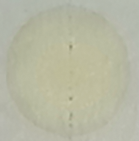
> Transmission oil from the manual transmission of a Ferrari Daytona 365
! OELCHECK lab: Urgent need for action!
The analysis of the wear elements (chrome!) provides clear indications of increased bearing and/or gear wear. + The oil is slightly turbid. Presence of water suspected. The FTIR spectrum confirms the increased water content.
Recommendation: Carry out an oil change as soon as possible and rectify the cause of the fault. Check the success of your measurements by conducting a new analysis.
Result of the spot test with self-assessment:
Oil can be reused without restriction
The spot was so bright that hardly anything was visible even when held against the light. Increased wear and significantly increased water content were not detectable. According to the colour classification, the test revealed normal operability.

> Engine oil from a VW T5 3.2 V6 petrol engine
! OELCHECK lab: Urgent need for action!
Even though the oil was only changed 7 months ago and at 18,000 km:
Water content significantly elevated. + Engine oil contaminated with coolant. + Advanced oil ageing. + Slightly increased fuel input. + Increased engine wear. + Slightly increased nitration value (NOx) due to blow-through gases.
Recommendation: According to the information that you have provided, the oil was already changed following sampling. Always check the cooling system. Have the motor setting checked!
Result of the spot test with self-assessment:
Oil change recommended
An increased fuel and water content were discovered. However, the entry of coolant and signs of engine wear were not detected.
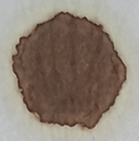
> Engine oil SAE 0W-20 from the petrol engine of a Jaguar XJ 3.0 l
! OELCHECK lab: Urgent need for action!
Significant engine wear + Severe oil ageing + Risk of attack on non-ferrous metals + Slightly increased water entry in the oil + Indication of insufficient compression + Blow-through gases/blow-bys (increased nitration)
Recommendation: Change the oil immediately!
Result of the spot test with AI evaluation:
Further test after 5,000 km
Recognised: Combustion residue, poor oil condition, increased water content. Incorrectly detected: Elevated fuel content. Not detected: High engine wear, severe oil ageing, inadequate combustion chamber seal, fuel entry not high, but slight and still in the normal range.
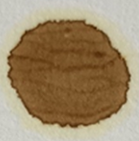
> Engine oil from the diesel engine of an Audi Q7 3.0 l TDI
! OELCHECK lab: Urgent need for action!
Significantly increased engine wear! + Significantly increased fuel entry! Possible cause of any unburned fuel in the engine oil due to cold starts, short-distance driving, incorrect fuel entry. + Oil can no longer sufficiently neutralise acids from the combustion process. The BN (base number) has significantly decreased.
Recommendation: Change oil immediately with prior flushing!
Result of the spot test with AI evaluation:
Further test after 5,000 km
Recognised: Soot formation, poor combustion, possible damage/preliminary damage due to mixture formation, poor oil condition, increased fuel and water content.
Not detected: Significantly increased engine wear, severe oil ageing including “acidification” of the oil.
UNSER FAZIT:
- A DIY spot test can provide information on abnormalities in engine oils. However, even with AI-supported evaluation, it cannot determine the exact extent of the abnormalities or their possible causes. The small print of the supplier of the DIY spot tests we used also states that it does not accept any liability and claims against it. It recommends using a laboratory for precise analyses.
- A DIY spot test is no replacement for comprehensive laboratory analysis. They are only suitable for getting a quick, rough idea. In some cases, however, they are quite misleading!
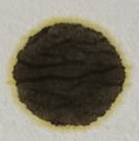
- The laboratory spot test, on the other hand, is far more accurate. OELCHECK checks all engine oils in compliance with the ASTM D7899 test standard.A droplet of oil is dropped onto a piece of filter paper. After the paper has been heated for one hour, the oil has been distributed evenly and is then evaluated with a computer-aided camera. Evaluations are made regarding the dirt-carrying capacity (dispersibility) and soot content of engine oils based on the surface area, the uniform appearance and the black colour of the spot. The dirt-carrying capacity of engine oils, which reveals the cleanliness of the engine, deteriorates as a result of additive breakdown, oxidation and acidic reaction products from fuel combustion. Alongside the IR spectroscopy, the spot indicates through a uniform distribution of soot particles whether the oil is still able to suspend impurities so that they can be transported to the filter and filtered off. The intensity of the dark colouring indicates the soot content. A transparent outer ring indicates fuel content. The oil droplet does not spread if anti-freeze agent glycol is present. The camera never lies, and in this case can convert the subjective perspective from a human visual inspection into an objective and reproducible statistical assessment.
- In every OELCHECK laboratory report for engine oils, we list the remaining dirt-bearing capacity of the engine oil in % under the heading “Oil condition”.
In addition, you will always find the photo of the spot created and evaluated in the laboratory in the report!
What's more: When analysing an engine oil in the OELCHECK laboratory, we never look at the result of a spot test in isolation, but only in combination with the more than 30 additional values measured in the laboratory analysis!
OELCHECK also answers your questions on the topics of lubricant and fuel analyses as well as tribology.
Contact us by e-mail at info@oelcheck.de or fax +49 8034 9047 47.
OELCHECKER Winter 2025, page 10-11


