

Rapid oil oxidation simulation – OELCHECK deploys new "TOPP Test" methodology
Year of publication: 2026
How can turbine oil oxidation be reliably predicted prior to operational deployment? OELCHECK addressed this challenge by implementing a novel test methodology in June 2026: the TOPP Test. Technical foundation for this innovation was established through presentations by Dr. Ludger Quick (Dr. Quick Schmierstoffberatung) and Jo Ameye (Fluitec) delivered at the OilDoc Varnish Symposium.
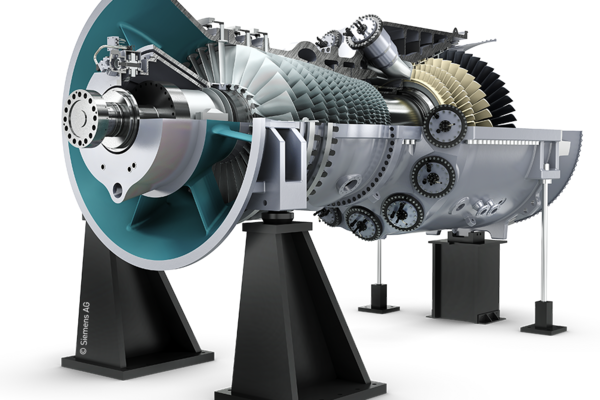
The practical reality: Modern gas turbines now operate at substantially higher power densities and efficiency levels than their predecessors from just decades ago.
This consequently increases bearing temperatures and pressures, elevating the thermal and oxidative burden on turbine oils in service. While established test methods such as TOST and RPVOT deliver valuable data on oil oxidation stability, they provide only limited insights into the oil's propensity for varnish formation.
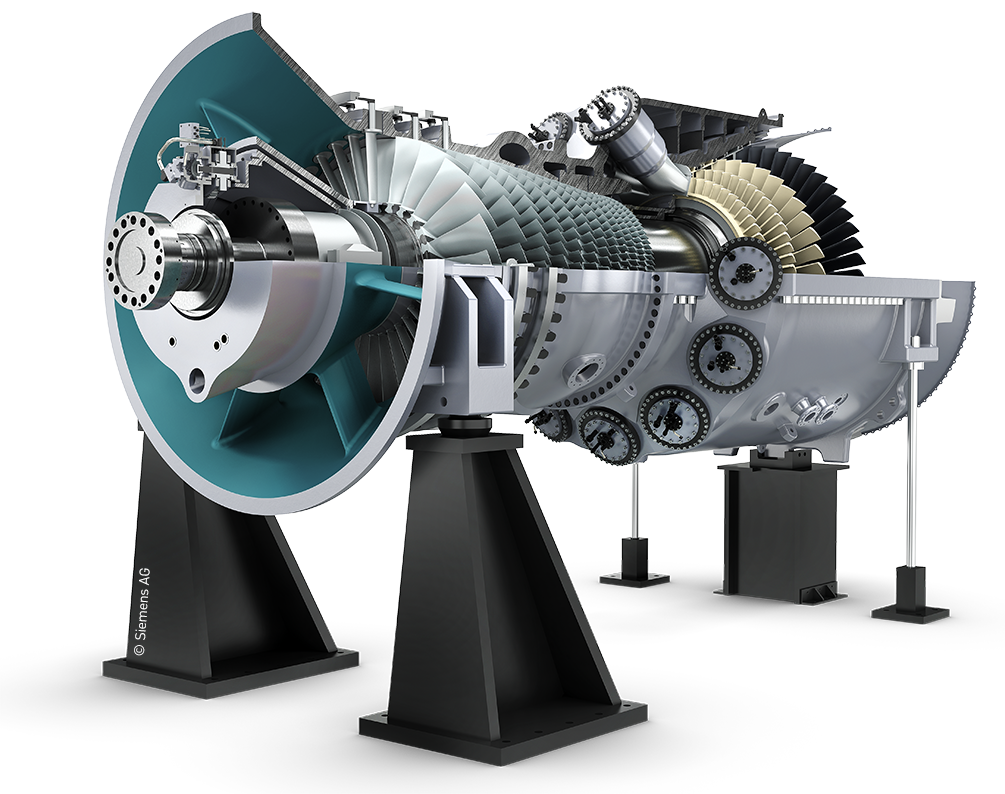
Siemens' SGT-9000 HL high-performance gas turbine produces 593 MW in simple cycle and 880 MW in combined cycle mode, with efficiency exceeding 64%.
Tracking aging and varnish formation potential
The TOPP Test (Turbine Oil Performance Prediction) addresses this gap. Four fresh oil samples are artificially aged at 120 °C under constant air flow for 3, 6, 9, and 12 weeks, then compared to the fresh oil baseline. Each sample undergoes analysis of viscosity, acid number, RPVOT, MPC, and RULER. This comprehensive stress profile reveals both aging resistance and varnish potential.

In addition, deposits that form on the inner walls of the TOST glass vessels during the aging process can be visually assessed and evaluated. The test standard for the TOPP Test along with comprehensive evaluation criteria are presently in the development phase. Upon completion and adoption of the standard, ASTM International will release additional technical documentation and guidance.
Complete test execution with fresh oil and four aged samples requires 2.5 liters total. Direct comparison of all five samples reveals the turbine oil's performance and aging behavior over the entire test period. Results are clearly presented in a single laboratory report.
The dedicated TOST test equipment procured for TOPP Test implementation is now operational at OELCHECK.
One week of TOPP Test corresponds to approximately one year in operation
The practical relevance of this procedure is demonstrated through comparison with field data: According to Dr. Ludger Quick, one week in the TOPP test – depending on the specific operating conditions and stress levels – is equivalent to approximately one year of gas turbine service. Fluitec has already validated this correlation using hundreds of used oil samples collected from field operations.
"A substantial quantity of TOPP test results exhibits excellent correlation with the performance characteristics of these products under operational conditions."
Dr. Ludger Quick

Incidentally: Also of interest for oils in ongoing operation
The TOPP test not only provides additional possibilities in the selection of new turbine oils. It can also deliver valuable insights for oil charges already in operational service. For example, if the service life of a turbine oil is to be extended through the targeted addition of antioxidants, the suitability of such an additive treatment can be verified using the TOPP test. In this manner, the impact of the measure on the subsequent aging behavior and performance characteristics of the oil can be assessed prior to application.
OELCHECKER Summer 2026 | Page 7


